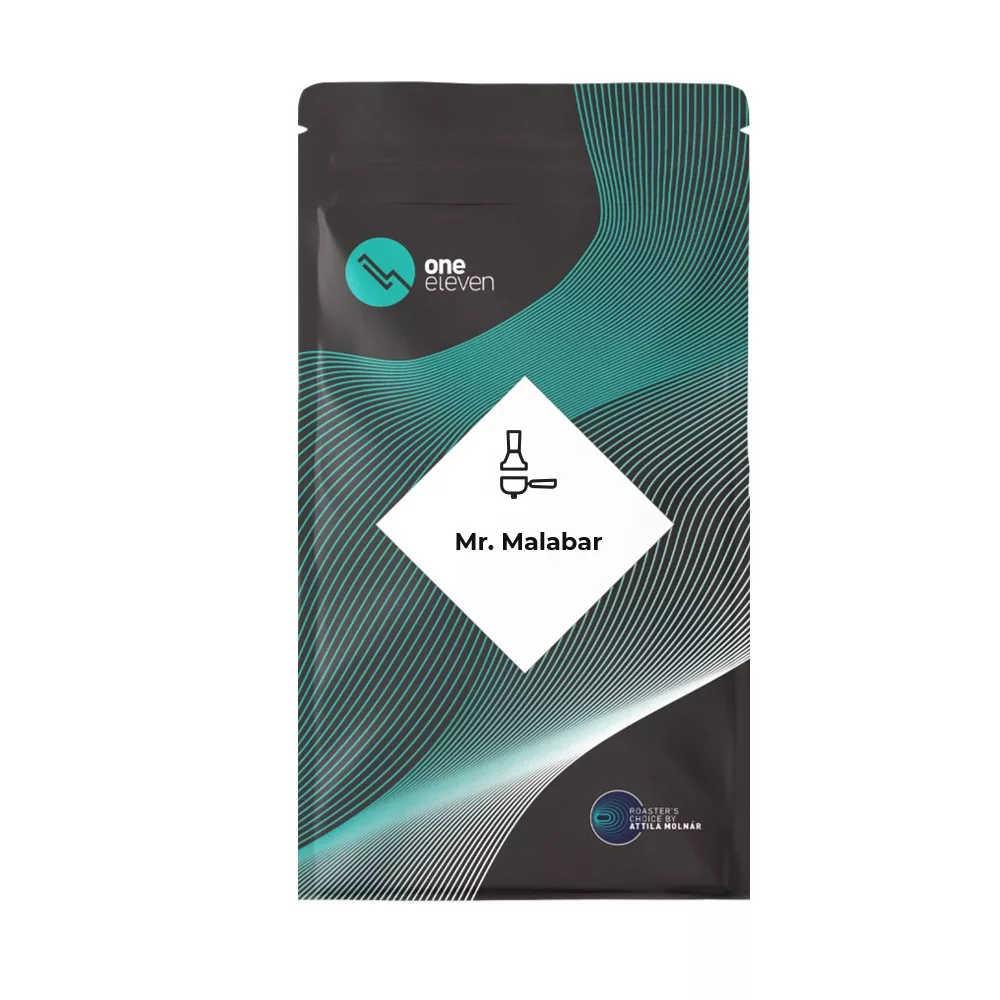
Mr.Malabar Indian specialty arabica coffee 200g
Owners: Various
Subregion: Various
Region: Karnataka & Kerala
Coffee Grade: Monsooned AA
Station: Various
Variety: Kent
Processing: Monsooned
Altitude: 1,100 to 1,200 meters above sea level
Harvest months: November- January
In our opinion: Dark chocolate muffin, dark chocolate, cream
About this coffee:
India is particularly well known for Monsooned Malabar, a unique coffee that was extremely popular in Europe during the 19th and 20th
centuries. The flavors of Monsooned Malabar were originally unintentional and were simply a byproduct of transporting green coffee beans to Europe. The journey from India to Europe took approximately 6 months and the coffee, which sat in the hull of the ship, would absorb moisture from the sea and the humid winds. The moisture led the beans to swell to a larger size and turn a pale beige color. The taste of
the coffee became smoother, softer and fuller. Today, though shipping technology has advanced and now allows for the control of moisture in hulls, the demand for Monsooned Malabar remains, leading some producers to recreate the conditions of this particular coffee using special setups in their warehouses that take advantage of the monsoon winds.
Coffee in India:
Though India is typically perceived as a tea-growing and drinking country, coffee production in the country actually predates tea. Records indicate that coffee first arrived in India in the 1600s, whereas tea did not arrive until more than 200 years later, in 1839. What does unite the two drinks, however, is that the British thirst for cheaper, more plentiful tea and coffee were the major reason that they were both first widely cultivated on plantations across India. Coffee farms are typically situated between 700 and 1,200 meters above sea level. Most coffee cultivation is ‘traditional’ and two-tier shade canopies are mixed with leguminous, nitrogenfixing trees. In this method, it is very common for coffee trees to be intercropped with spices (like vanilla or pepper) and fruit trees. After harvest, which is most often done by hand by family members or hired laborers, cherry is usually processed as Natural or Fully washed. Most farms dry coffee on patios or tables, though some of the larger estates also have mechanical dryers. Today, approximately 30% of coffee production is consumed internally. The other 70% is prepared for export.