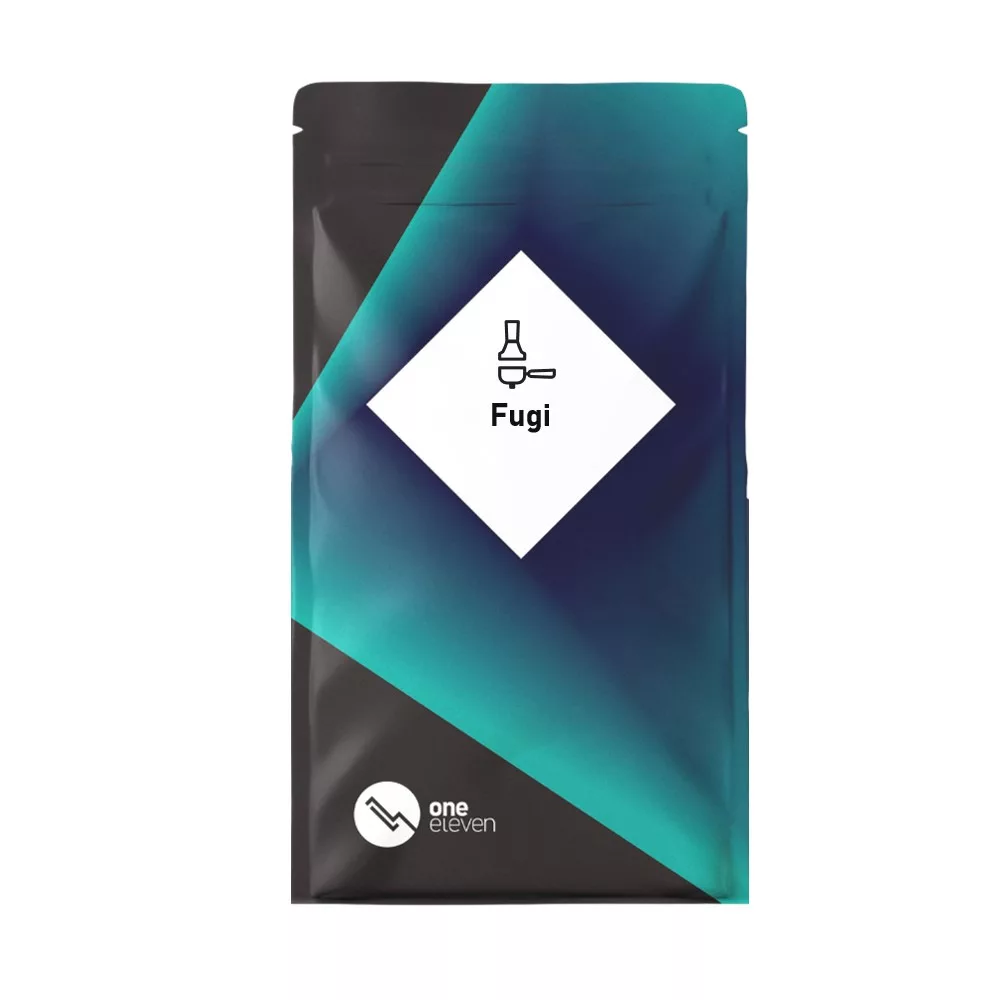
Fugi ruandai specialty szemes arabica coffee 200g
Fugi, Rwanda
Subregion: Nyaruguru
Region: Southern Province
Owner: 37 young workers
Variety: Red Bourbon
Processing Station: Fugi Washing Station
Processing: Fully washed
Elevation: Washing station — 1,550 meters; Farms — 1,550–1,850 meters
Harvest months: March–June
In our opinion: Raspberry sugar, lemon, butter
About the coffee:
The youth group at the Fugi washing station was founded because young adults in the area were drawn to coffee farming after seeing how successful their parents and neighbors were. Emmanuel Rutasira advised these young people to ask their parents for a plot of land to farm, or to obtain written confirmation from their parents that they would inherit the farm, and he launched a special program for young farmers in Nyarunguru. Emmanuel gave them free seeds so they could start their own coffee plantations, and after three years, they began delivering coffee beans to the Fugi washing station. The group consists of 37 farmers, all around 30 years old. The Fugi washing station is named after the hill on which it stands, 1,550 meters above sea level. Our local partner purchased the station. Since then, the station’s management team—composed of agronomists—has been working with the farmers to teach them proper agricultural practices, improve their access to production tools, and help them produce the highest-quality coffee beans possible.
About Cultivation:
Rwandan farmers have small coffee plantations, typically consisting of about 250 trees. Most coffee trees are grown in mixed cropping systems with food crops such as corn and potatoes. Despite their small size, coffee remains the main cash crop for many farmers and their largest source of income throughout the year. Washing stations operating throughout the country strive to encourage high-quality coffee production by offering better prices and support to farmers who wish to improve the quality of their crops. In the early 2000s, the Rwandan government—in collaboration with international partners—identified coffee as the potentially most important source of urgently needed export revenue. To improve coffee quality, the government encouraged the establishment of new washing stations in coffee-growing regions and developed partnerships with local stakeholders to ensure that farmers would be the primary beneficiaries. As part of this effort, the government supports washing stations by providing production equipment. The stations, in turn, transport raw materials from government warehouses to the region to make them more accessible to producers. The station also participates in training producers so they can learn how to use the raw materials properly. The Fugi station supports farmers in many other ways as well. The station provides safety equipment, such as masks and gloves, which farmers can use when applying certain chemicals. Fugi also supports farmers with small, one-year loans to help cover production costs and other expenses, such as medical bills or school tuition. The station grows seedlings and distributes them to farmers to help them replace aging trees. It conducts training sessions on hygiene and public health and helps farmers gain access to clean water. Fugi also organizes programs called “Farmer Field Schools” (FFS). FFS groups consist of 20–30 farmers who live and farm near one another. The farmers then elect a lead farmer, who participates in training sessions held at the research station. The lead farmer returns to their own area and uses a demonstration plot located in a central location to teach their group. Through the FFS, farmers learn about soil conservation, water conservation, waste management, and other topics.
Harvest and Post-Harvest Processing:
During the harvest season, farmers and their family members pick the cherries by hand, sorting them as they go. Farmers transport the cherries on foot or by bicycle to the station or to a centrally located collection point. Fugi encourages farmers to sort through the cherries and remove any unripe, damaged, or overripe ones before selling them to the station. At Fugi, staff sort the cherries by hand and then subject them to a float test to check their density. The station accepts only those cherries that pass both the visual inspection and the float test. On average, 120 seasonal workers are employed at Fugi, overseeing and inspecting the cherries from arrival through pulping, drying, and beyond. The accepted cherries are then pulped using a Mackinon pulper and undergo dry fermentation for 12 hours. The parchment is soaked in clean water for 8 hours to ensure complete removal of the mucilage before being washed through grading channels. Each station uses its own, expanded grading system to sort the coffee beans into different quality grades and size categories. Most stations offer three size categories: A, B, and C, of which A is the largest and highest quality. After grading, the green coffee beans are transported to one of the two drying rooms at the Fugi station. The covered rooms provide shade and allow the coffee to rest while station employees sort through the wet, unhulled coffee cherries and remove any defective beans. Shortly thereafter, the unhulled coffee cherries are placed on drying beds to dry in direct sunlight. When the temperature rises too high, the beans are covered with sheets that allow some of the heat to pass through to the beans. Overall, the drying process for fully washed coffee with the husk still on takes about 33–40 days at the Fugi station.
Coffee in Rwanda:
Despite its turbulent history, Rwanda is now a favorite in the world of specialty coffee—and for good reason! Our sister company in Rwanda is doing a wonderful job of delivering Rwanda’s finest beans to coffee roasters around the world. German missionaries and settlers introduced coffee to Rwanda in the early 1900s. Large-scale coffee production began in the 1930s and 1940s under Belgian colonial rule. Coffee production continued even after the departure of the Belgian colonizers. By 1970, coffee had become Rwanda’s largest export, accounting for 70% of total export revenue. Coffee was considered so valuable that, starting in 1973, it was illegal to uproot coffee trees. Between 1989 and 1993, the collapse of the International Coffee Agreement (ICA) caused world market prices to plummet. The Rwandan government and economy were severely affected by low global coffee prices. The 1994 genocide and its aftermath led to a complete collapse of coffee exports and vital dollar revenues, but the incredible resilience of the Rwandan people is evident in the way the economy and stability have since recovered. Modern Rwanda is considered one of the most stable countries in the region. Since 2003, its economy has been growing at a rate of 7–8% annually, and coffee production has played a key role in this economic growth. Coffee has also played a role in Rwanda’s significant progress toward gender equality. New initiatives aimed at women—which focus on equipping them with the tools and knowledge necessary for farming—have changed the way women view themselves and interact with the world around them.